
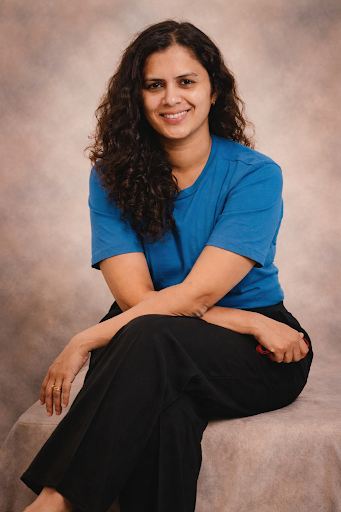
 Shweta Asuti, Partner at Orange Videos
Vernacular Video Strategy: How Regional Content Is Driving Growth in India
India doesn't have one audience. It has hundreds.
A brand film that lands beautifully in Mumbai can fall completely flat in Coimbatore — not because the idea is wrong, but because the language is. As India's internet population races toward 900 million users, the brands winning hearts (and market share) are the ones that have stopped speaking at their audience and started speaking with them — in their own language, their own idiom, their own emotional register.
This is what vernacular video strategy is about. And for Indian brands, it's no longer a nice-to-have. It's the growth lever most are still underestimating.
The Numbers Are Hard to Ignore
According to IAMAI & Nielsen, 68% of Indian users prefer content in their native language — and 88% say they trust local-language content more than English. Let that sink in. Nearly nine in ten Indians are more likely to trust a brand that speaks to them in their mother tongue.
YouTube India reported that over 60% of its watch time now comes from regional language videos, led by content in Tamil, Telugu, and Bhojpuri. Regional content creators drive approximately 40% higher engagement and conversion rates than their English-speaking, metro-based counterparts.
The market itself is expanding fast. India's digital video content market reached USD 19.30 billion in 2024 and is projected to reach USD 46.40 billion by 2033 — with regional content cited as a significant growth driver.
The verdict from the data is clear: if your video content is only in English, you are already leaving a massive audience and significant revenue on the table.
Where Vernacular Video Works Best
1. Customer Testimonials and Real Storytelling
This is where vernacular content has the most powerful impact — and it's also the most underused format.
When a real customer tells their story — about how a product changed their life, solved a problem, or made them feel seen — that emotion has to come through in the language they think in. Dubbed or translated testimonials lose the texture. The pauses, the warmth, the authentic imperfection that makes real people believable — all of that gets diluted in translation.
A farmer from Nashik speaking in Marathi about a banking product. A homemaker from Hyderabad describing her kitchen appliance in Telugu. A young entrepreneur from Surat sharing his success story in Gujarati. These are not just language choices, they are emotional choices. And they resonate in ways a polished English TVC simply cannot.
At Orange Videos, we've seen this firsthand. When testimonial content is shot and delivered in the subject's native language, the on-camera comfort, the eye contact, and the emotional honesty are markedly different. The camera picks all of it up.
2. Explainer Videos
Explainer videos have one job: make the complex simple. That job becomes exponentially harder when the audience is processing your content in a second language.
Whether you're explaining a financial product, a healthcare service, a SaaS tool, or a government scheme, the moment you switch to the viewer's native language, comprehension improves dramatically. So do completion rates, click-throughs, and downstream conversions.
3. Brand Films and Ad Films
Regional ad films and brand films work — but only when they're genuinely localised, not just translated.
The Single Biggest Mistake in Vernacular Video: Literal Translation
Here's where brands consistently go wrong. They create a master script in English (or Hindi), hand it to a translator, and expect the output to work in Tamil, Kannada, or Odia. It rarely does.
India's languages aren't just different words for the same ideas. They carry different cultural references, different rhythms, different humor, different notions of respect and relationship. A tagline that's punchy in Hindi might sound awkward in Bengali. A metaphor that's powerful in English might not even have an equivalent in Marathi.
A literal translation often misses the tone, humor, or cultural relevance that makes content feel authentic. Effective vernacular content requires localisation — adapting not just the words but also the cultural context and emotional cues.
The rule we follow at Orange Videos: don't translate the master copy, rewrite it. Give your regional language writer the brief, the emotion, and the objective — and let them craft something that sounds like it was born in that language. The final output should never feel like it came from somewhere else.
AI Has Made Language Adaptation Faster — But Human QC Remains Non-Negotiable
One of the biggest changes in vernacular video production over the last two years is the role of AI. Voice synthesis, lip-syncing tools, AI dubbing platforms, and language models have dramatically reduced the time and cost of creating multi-language versions of a video.
What once required booking multiple studios across cities, coordinating with regional voice artists, and weeks of post-production can now be turned around in a fraction of the time. For brands that need to deploy the same campaign across five languages simultaneously, this is a genuine game-changer.
But — and this is important — AI is only as good as the brief you give it, and the quality check that follows.
Regional audiences, especially first-time internet users, are often skeptical of polished ads. They tend to trust peer reviews, community voices, and content that feels organic over slick corporate messaging. An AI-generated voice that sounds slightly off, or a script that was machine-translated without cultural sensitivity, will break that trust instantly.
The workflow that actually works: AI for speed and scale, native human QC for accuracy and authenticity. The person reviewing your Tamil video should be a native Tamil speaker — not someone who studied the language, but someone who grew up in it. They will catch what no model will: the wrong honorific, the tone that sounds foreign, the idiom that doesn't land.
This combination — AI efficiency + human cultural fluency — is what produces vernacular content that genuinely connects.
A Quick Look at Our Work
We've had the opportunity to produce vernacular content for clients across categories, and the pattern is consistent — when the language is right, the performance follows.
One of our recent projects demonstrates the difference that language-native production makes in brand communication. You can view our full portfolio here or watch the explainer video below.
▶ Watch: Vernacular Explainer Video
What Brands Should Do Now
The vernacular video opportunity isn't coming — it's already here, and it's already being captured by brands willing to invest in it. Here's where to start:
- Start with one language, one format. Pick the regional market most important to your next growth phase, and build one strong vernacular asset — ideally a testimonial or a brand film done properly.
- Localise, don't just translate. Brief a regional language writer directly. Give them the emotion and the goal, not just the English script.
- Use AI for scale, humans for soul. Let technology do the heavy lifting on production speed, but never skip the native speaker review.
- Measure differently. Vernacular content often shows its impact in completion rates, shares, and offline word-of-mouth before it shows up in direct conversions. Track the full picture.
India is a country where the language you speak signals whether you belong. Brands that get this — and invest in video content that genuinely belongs in each market — are the ones building real, lasting connections with the next billion consumers.
Orange Videos is a Mumbai-based video production agency specialising in ad films, brand films, AI-powered videos, 2D animation, and vernacular content for brands across India and globally.
Get in touch with our team or call us at +91 8879504292.
