
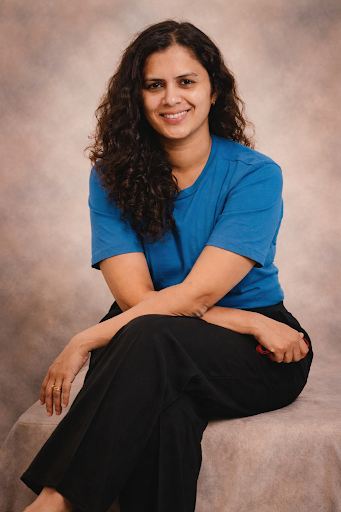
 Shweta Asuti, Partner at Orange Videos
What It Really Takes to Shoot a Brand Film in 3 Days, 40-Degree Heat, and a Golden Retriever
This time of year always takes me back to last summer, standing on a badminton court at 11am, watching the thermometer inch past 40 degrees, wondering how on earth we were going to wrap six sporting venues in three days.
We were in the middle of shooting the Hiranandani Arena brand film. And every single challenge it threw at us — the heat, the logistics, the ensemble cast, the object-led transitions — ended up making the final film what it is.
Before I get into the behind-the-scenes of how we pulled it off, watch the film first. It will make the rest of this make a lot more sense.
The Brief — And Why It Was Not Simple
Hiranandani Arena is a large-format multi-sport complex. The brief was to make a brand film that captured the energy of the space — every sport, every age group, every corner of the facility — in a way that felt dynamic and alive, not like a property brochure. The contrast with a static corporate video had to be immediate and unmistakable.
That meant a large ensemble cast, multiple venues spread across significant distances, and a visual language built on seamless, fast-cut transitions between sports. On paper it sounds exciting. On set, in an Indian summer, it is a different story.
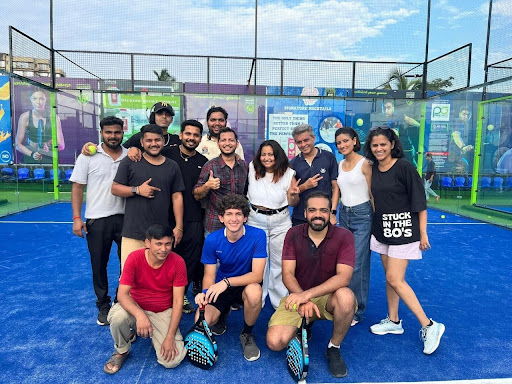
The One Technique That Made the Film — And the Preparation It Demanded
Object-Led Transitions
If you watch the film carefully, you will notice something. The cuts are not standard. A tennis ball flying out of frame becomes a basketball mid-dribble in the next shot. The swing of a badminton racket leads your eye directly into a swimming pool sequence. Every transition is driven by an object in motion — and every cut feels earned.
These transitions are what give the film its energy. They are also one of the hardest things to execute in production, because they look effortless only when they have been planned down to the millimetre.
You cannot wing object-led transitions on set. The direction the object is moving, the velocity of the camera, the angle of entry and exit — all of it has to be mapped out before the shoot. If clip A and clip B are even slightly misaligned in terms of movement direction or speed, the transition falls apart in the edit and you are left with a jarring cut rather than a seamless one.
For this film, every single transition was storyboarded. Our directors and DOP sat with the edit logic before we ever stepped on set, working backwards from what needed to be true in post to what had to be captured on the day. That pre-production rigour is what made the transitions work.
Casting — Why We Needed Real Athletes, Not Just Great Faces
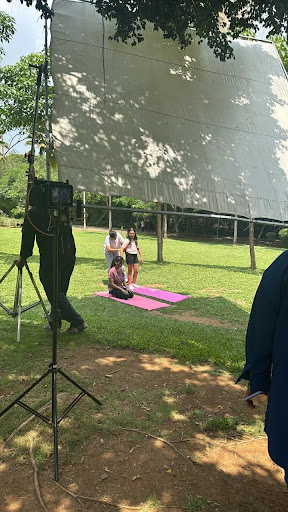
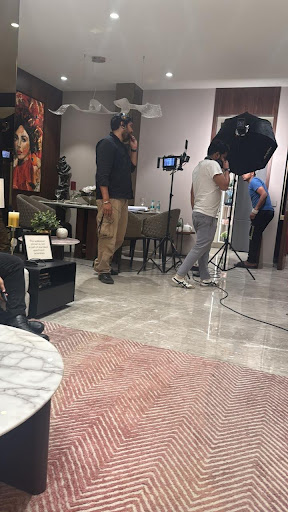
When you are shooting high-definition slow-motion footage of sport, the camera sees everything. The grip on a racket. The follow-through on a cricket shot. The body position in a yoga sequence. You cannot fake muscle memory at 120 frames per second.
Our casting brief was unusual. We were not just looking for people who looked the part. We needed people who could actually play. The grip on a squash racket, the posture through a swimming stroke, the way someone receives a serve — these are things that athletes have in their bodies from years of practice. They are things a model who has never played the sport simply cannot replicate in a few minutes on set.
This meant our casting process was longer and more specific than a typical brand film. We were essentially looking for athlete-talent hybrids — people who fit the visual brief and had genuine sporting credibility. It took more time upfront, but it saved us enormous time on set and gave the film an authenticity that audiences feel even if they cannot name it.
Representing Everyone — The Ensemble Challenge
The Arena is not a single-sport facility. It serves a wide cross-section of people — children learning to swim, young adults in competitive sport, older residents doing yoga, families spending a weekend together.
The film needed to reflect all of that. Which meant we had an ensemble cast across a significant age range, and every character needed adequate screen time without slowing the pacing down.
Balancing representation with momentum is harder than it sounds. You are trying to tell multiple stories simultaneously while keeping the energy of the film moving forward. Each character had a defined role, a specific transition to own, and a precise slot in the shooting schedule. There was no room for ambiguity — if one character's scene ran over or under, it affected everything downstream.
Three Days, Seven Venues, Forty Degrees
Now for the part that still makes me a little tired just thinking about it.
We had three days to shoot everything. The venues were spread across significant distances. Moving a full film crew — camera rigs, lighting equipment, sound, the cast, wardrobe, and all the rest — between locations takes time. And we were doing it in peak Indian summer heat.
The logistics required a level of planning that was closer to military scheduling than a typical production call sheet. We mapped out the most efficient movement routes between venues, built buffer time into every transition between locations, and designed our lighting setups to be as lean and fast to assemble as possible without compromising the visual quality.
Managing the physical wellbeing of the crew and cast in that heat was not optional — it was a production necessity. Hydration, shade, short rest windows between setups, and highly efficient blocking kept everyone functional and focused. When the sun is your enemy, you plan around it.
Zero margin for error over three days sounds stressful. It also, honestly, brings out the best in a crew. Everyone was sharp, fast, and completely focused.
The Best Part of the Whole Shoot
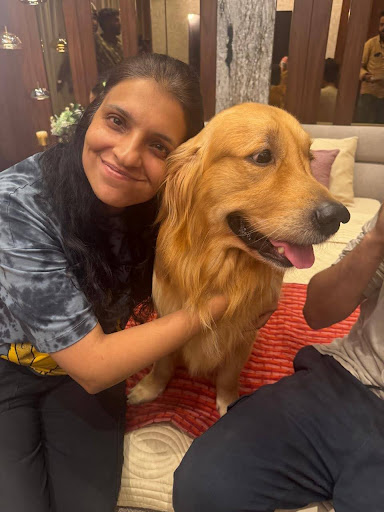
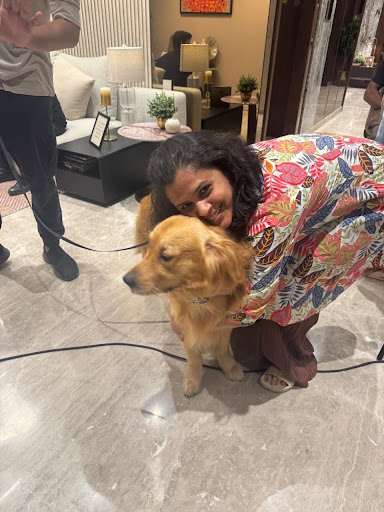
Amidst all of the above — the transitions, the casting, the ensemble management, the heat, the logistics — the moment the whole crew genuinely stopped and smiled was when our four-legged cast member showed up.
A Golden Retriever. Utterly unbothered by the schedule, thoroughly interested in everyone's lunch, and genuinely the most photogenic presence on set.
Working with animals introduces a beautiful unpredictability to a production. You plan, they decide. Keeping our furry guest comfortable in the heat, ensuring he was well-rested and hydrated, and actually getting the shots we needed involved a fair amount of patience and a lot of treats. He delivered. The crew adored him. And he is, objectively, the best thing in the film.
What Those Three Days Produced
Looking back at the Hiranandani Arena film, what stands out to me is not any single shot or transition. It is the fact that everything in that film was earned. The energy you feel watching it came from three days of disciplined, hot, technically demanding production work that started weeks earlier in a pre-production room.
That is what brand filmmaking actually is. The camera is the last part of the process. The work that determines whether a film is great or mediocre happens long before anyone calls action.
If you would like to explore more projects like this, you can view our portfolio.
If you have a brand film brief you are sitting on — or a campaign that feels too complex to execute — that is exactly the kind of challenge we are built for.
Write to Shweta at shweta@orangevideos.in or call +91 9867409221.
